CANNABIS DECONTAMINATION Systems For any size grow

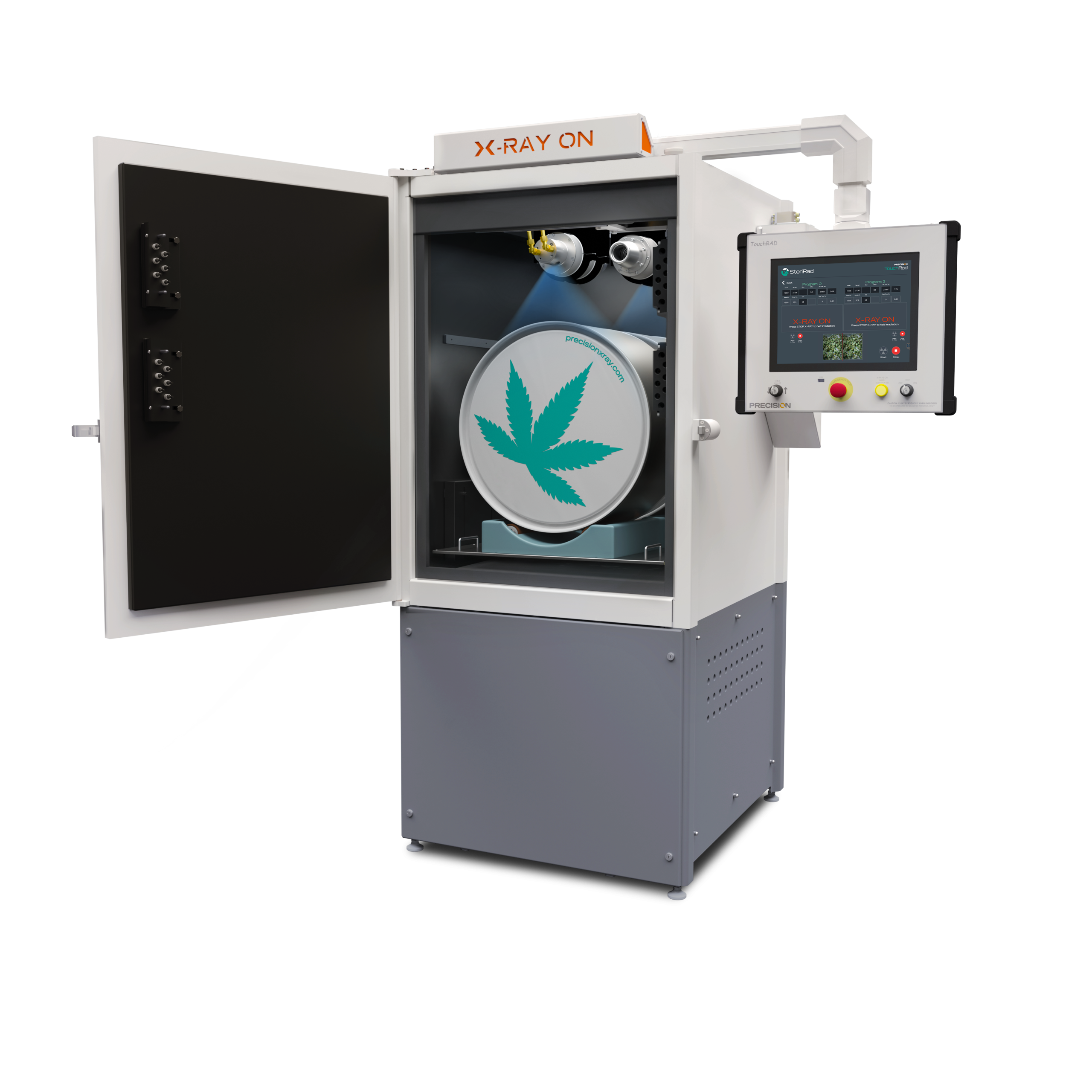
SteriRadHD
High-Throughput Remediation

SteriRad+
Optimize Throughput and Power

*Using 90% targeted microbe reduction level. Will vary with microbial load and product density

All SteriRad Systems include:

Since using the SteriRad Precision X-Ray, Inc machine, we’ve seen incredible improvements in product remediation. Before, we struggled with costly processing or ozone treatments that compromised quality. Now, our product stays in top shape with minimal effort. The machine is easy to use, the support is outstanding, and our ROI was faster than expected. I only wish we had made the switch sooner!

- Marc D., Post Harvest Manager

What is cannabis decontamination?


Cannabis decontamination is the process of removing or reducing harmful microorganisms such as bacteria, mold, yeast, and fungi from cannabis plants and products. These contaminants can develop during cultivation, harvesting, or storage, potentially posing health risks to consumers.

Decontamination methods are used to ensure the safety and quality of cannabis products, particularly in the medical and recreational markets where strict regulations are in place. Techniques for cannabis decontamination include:

  • X-ray irradiation: A method that uses X-rays to deeply penetrate cannabis buds, effectively killing microorganisms without altering the product’s quality.
  • Radiofrequency (RF) treatment: A method that uses electromagnetic waves to reduce microbial contamination.
  • Ozone treatment: A surface-level treatment that uses ozone gas to kill mold and bacteria.

Decontamination helps extend the shelf life of cannabis products and ensures they meet safety standards for consumption, particularly for medical cannabis patients or immunocompromised individuals.

What are the various decontamination techniques for cannabis?

Cannabis can be decontaminated using several technologies, each targeting microbial contamination differently:

  • X-Ray Treatment
    A non-thermal, non-chemical method that penetrates deep into the flower to eliminate microbes, including hidden mold in cannabis, while preserving potency and terpenes.
  • Gamma Irradiation
    Uses radioactive energy to sterilize products. It is effective but highly regulated and less commonly used due to safety and perception concerns.
  • Radiofrequency Treatment
    Heats cannabis using electromagnetic waves. It can reduce microbial loads but risks damaging cannabinoids and terpenes if not carefully controlled.
  • Ozone Treatment
    Exposes the product to ozone gas. It can reduce surface microbes but may leave residues and does not effectively treat contamination inside dense buds.
  • E-beam Irradiation
    Uses high-energy electrons to sterilize. Like ozone and UV, it is mostly effective on surfaces and may not reach internal contamination.
  • UV light Sterilization
    An accessible but surface-only method. It has limited effectiveness for dense cannabis flowers and may degrade sensitive compounds.
What is the difference between decontamination and remediation?

Decontamination is a process that removes or neutralizes dangerous substances from the marijuana without changing the actual product type or category of the marijuana. For example, after a Harvest Batch of marijuana flower has been decontaminated (after the Decontamination process is complete), the marijuana remains in the form of flower rather than having been changed into a different marijuana category (such as a Regulated Marijuana Concentrate or Marijuana Product).

Remediation is a process that removes or neutralizes dangerous substances from the marijuana and results in changing the product type or category of the marijuana. For example, after a Harvest Batch of marijuana flower has been remediated (after the Remediation process is complete), the marijuana has been transformed into a different marijuana category. Remediation is allowed in only two scenarios: (1)
Marijuana flower that failed for microbial contamination may be processed into solvent-based Regulated Marijuana Concentrate and (2)
marijuana flower that has failed for elemental impurities may be processed into Regulated Marijuana Co

What is a Secret Shopper?

A Secret Shopper is an undercover representative—often working for a state regulator or third-party agency—who visits licensed cannabis dispensaries or grow sites posing as a regular customer. Their role is to anonymously purchase cannabis products for randomized testing, usually focused on safety, labeling accuracy, and microbial values.

What is a PCR test and what do the results show?

A PCR test (Polymerase Chain Reaction) is a lab method used to detect the DNA of microbes in a cannabis sample. It’s highly sensitive and can confirm whether microbial material—like mold or bacteria—is present.

However, PCR can’t tell if the microbes are alive or dead. For example, after treatment, the DNA of microbes may still be in the product even though the microbes can no longer grow or cause harm. This can lead to false positives, making it look like contamination is still present when it’s not.

What is a colony forming unit (CFU)?

A Colony Forming Unit (CFU) measures the number of live, viable microbes in a cannabis sample. It’s based on how many colonies grow on a petri dish during lab testing.

Since microbes can regrow over time, it’s important to consider how long cannabis sits between testing, reaching the dispensary, and final sale. A product may pass initial testing but still pose a risk if not fully decontaminated.

What is Botrytis cineria (bud rot)

It is necrotrophic – a pathogens that derive nutrients from dead or dying cells. Botrytis travels through water, air, clothing, fertilizer, container and tools. Botrytis thrives in humidity, soil and plants.

What is Powdery Mildew

Is one of the most common blights to cannabis. Powdery Mildew travels through water, air, clothing, fertilizer, container and tools. Powdery Mildew thrives in humidity, soil and plants.

What is Fusarium? (aka the stealth bomber)

Out of sight, Out of mind – hard to detect, hidden in soil, acts as “stealth bomber”. Form – comes in the form of plant & root rot. Relentless – continuously infects the plant in form of wilt or root rot. Visual Signature – its incredibly visual with white or grey foam on bud and leaves.
Fusarium travels through water, air, clothing, fertilizer, container and tools. Fusarium thrives in humidity, soil and plants.

What if I want to treat pre-rolls?

Pre-rolls can also be treated in the same method as a “full” batch. We will work with you to input preset settings for all your applications.

Why are regulations different across various regions?

In the U.S., cannabis is not federally regulated. Instead, each state sets its own rules for cultivation, testing, and sales. This leads to major differences in things like microbial limits, approved decontamination methods, and required cannabis testing protocols.

Since there is no national standard, what’s compliant in one state might not pass in another. Staying up to date with your local regulations is essential to remain in compliance.

How much of the cannabis market is smoked compared to other methods?

Smoking remains the most popular method of cannabis consumption. Estimates show that 60–70% of the cannabis market is made up of inhalable products, including flower, pre-rolls, and vapes. This means a significant majority of cannabis is consumed through methods where product purity and safety are especially critical.

Of the tests, which has the highest failure rate in cannabis?

Microbial testing has the highest failure rate in the cannabis industry. Mold, yeast, and bacteria are common contaminants that can develop during cultivation, drying, or storage.

Even products that appear clean can fail microbial tests, especially if decontamination methods aren’t effective or if post-treatment regrowth occurs. This makes microbial control one of the most critical—and challenging—aspects of cannabis compliance.

Which method of decontamination is the biggest competitor to X-Ray?

Gamma irradiation is the closest competitor to X-ray treatment. It also penetrates deeply and effectively kills microbes without heat or chemicals. However, it involves radioactive materials, which require stricter safety protocols and licensing.

Ozone treatment is another widely used method. It’s effective for surface-level decontamination but doesn’t reach internal contaminants as reliably as X-ray or gamma. Both are used in the industry, but X-ray offers a strong balance of safety, depth, and ease of operation.

What is the diameter of the drum?

The drum is 40cm

What is the maximum power of the system

17.7mA @ 225kV

Are there other container sizes?

Yes! Besides the standard 10-gallon drum, we now offer a 24-gallon drum, the largest in the industry. It is designed to handle high-volume batches with greater efficiency.

Can I use the drum if it is not full?

Yes, you can safely run a decontamination cycle even if the drum isn’t completely full. To maintain consistent X-ray treatment for cannabis, we recommend using inert filler materials—such as bubble wrap—to help center and stabilize the product inside the drum.

Does the Product have to go inside the drum or can I put it directly on the shelf?

If you wish to put product directly on the shelf, we will need to work with you to input dose settings.

What happens if I grind my cannabis?

The denser the material (grinding) the longer it may take for a cycle to complete, since the dose gets absorbed more quickly by more dense material.

Learn how cannabis decontamination can elevate your production.

Speak with our experts today.

    SteriRad

    14 New Road
    Madison, CT, 06443

    Phone: 203.484.2011
    Fax: 203.484.2012

    Want To Learn More?

    Part of Tibidabo Scientific Industries

    Contact Us

    14 New Road
    Madison, CT, 06443

    Phone:
    203.484.2011
    Email:
    support@pxinc.com